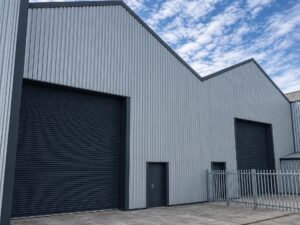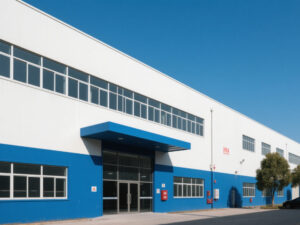
Two steel buildings with the same floor area can differ in price by a third or more — and both prices can be honest. A steel building is not a catalogue product with a fixed tag; it is priced from the structure your project actually needs. These are the factors that move the number, in roughly the order they matter.
1. Span, height and loads — the steel weight itself. Most of a quotation is steel, and steel is sold by weight. A wider clear span, a taller eave and heavier design loads (wind, snow, cranes, rooftop solar) all mean heavier columns and rafters. This is why a 30-metre clear-span warehouse costs more per square metre than the same area split into two 15-metre spans — and why the cheapest way to save money is often a smarter layout, not a cheaper supplier.
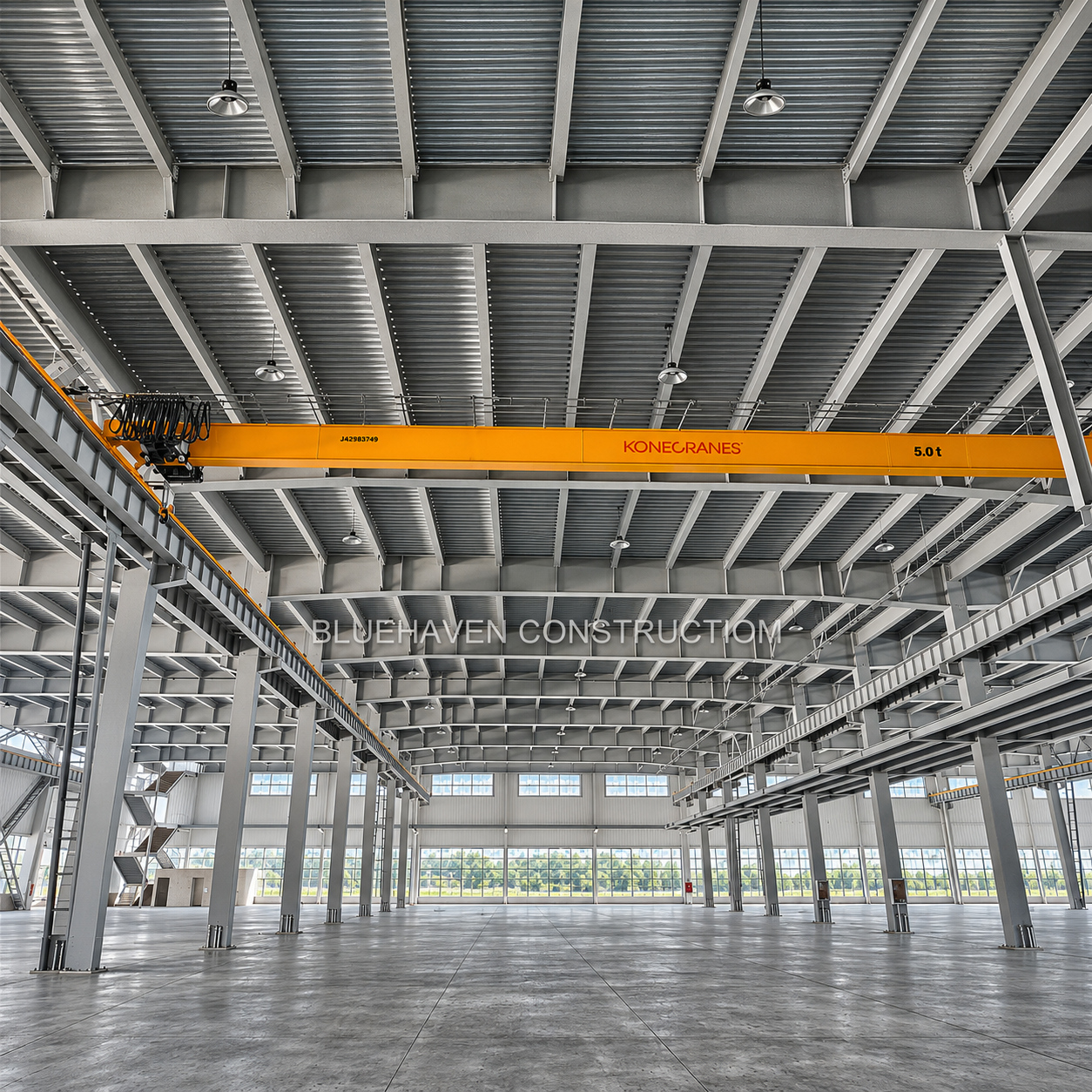
2. What hangs on the structure. Overhead cranes are the big one: crane loads run through the columns, so a crane building is a different, heavier structure than the same building without one. Mezzanine floors, large door openings and heavy rooftop equipment add steel in the same way.
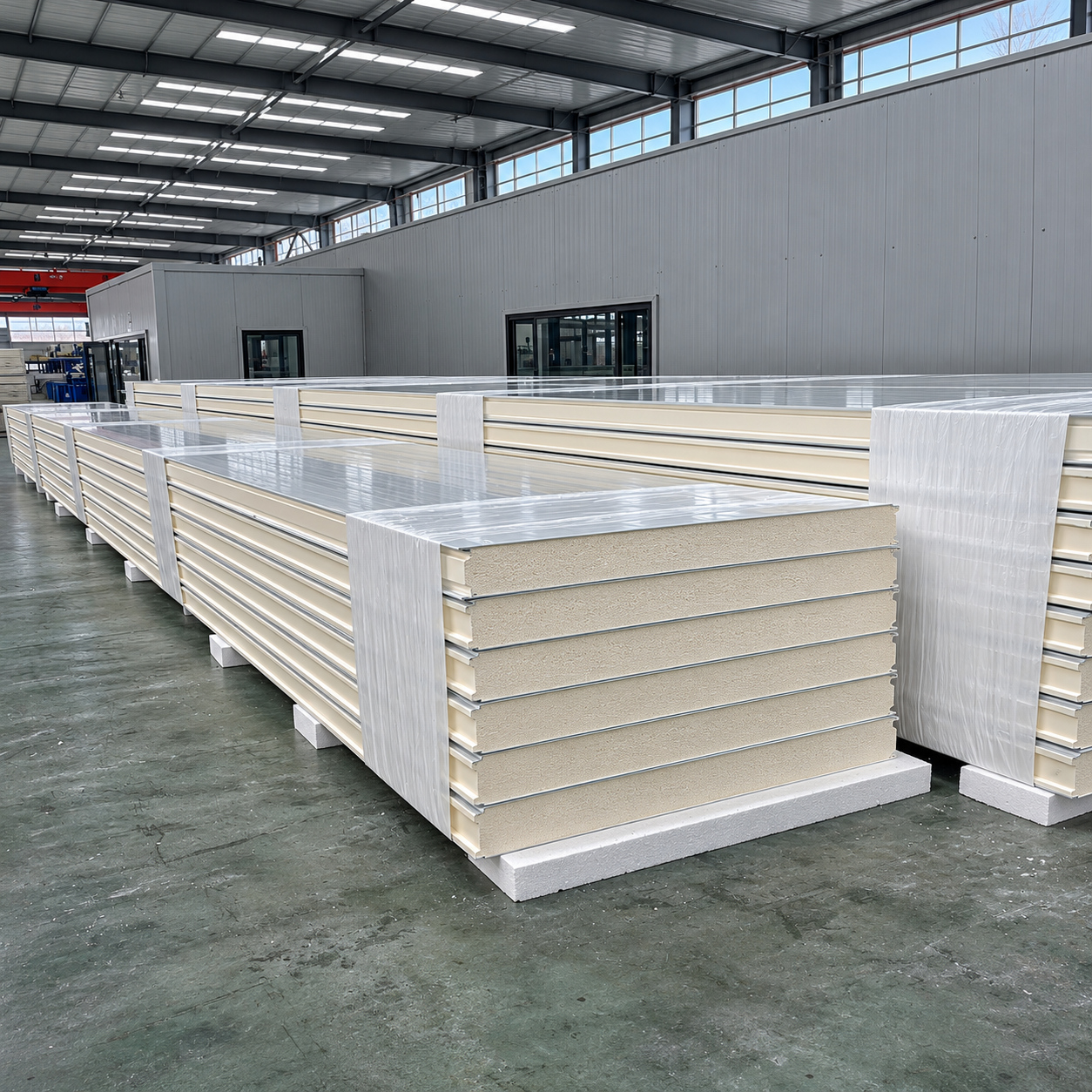
3. Roof and wall system. A single-layer sheet is the baseline. Insulated sandwich panels, thicker sheets, skylight strips, ventilation and special coatings for corrosive environments (coastal sites, poultry farms, chemical storage) each add cost — and each is cheap compared with retrofitting it later.
4. Doors and accessories. Every opening needs framing, and large doors — hangar doors, industrial sectional doors — are significant line items on their own. Flashings, gutters, downpipes, fasteners and connection accessories are small individually and easy to forget in a comparison, which is exactly why a proper quotation lists them.
5. Design basis and documentation. A building designed for high wind or snow loads, or one that needs detailed drawings and calculation documents for local approval, carries more engineering and often more steel than a standard design. What your local authority requires belongs in the quotation from the start.
6. Quantity and phasing. One building quoted once is the baseline; several identical buildings, or a park built in phases to one repeated specification, spread design and setup costs and usually price better per square metre.
7. Delivery terms and destination. FOB, CFR and CIF prices are not comparable numbers — freight and insurance to your port can be a substantial share of the landed cost. Compare quotations on the same terms, to the same port, with the same supply scope, or you are not comparing quotations at all.
The practical conclusion: a per-square-metre price quoted without your dimensions, loads and cladding choices is a guess wearing a number’s clothes. Send the project information — or build your specification in our online configurator — and the quotation you get back is itemised against these factors, so you can see what you are paying for and where a change would save money.
Want a price built on your actual project? Send your dimensions, location and building use through the quotation form, or start from the building configurator — we reply with an itemised specification and supply scope.